E-commerceDevelopment
A storefront that closes the sale, not just displays it.
An online store has one job past looking good: turning a browse into a checkout. We build storefronts with real payments, configurable products and the operational backend behind them — the parts a template can't give you.
Most carts get abandoned
before checkout even starts.
A slow product page, a confusing size chart, a checkout that asks one question too many — each one is a sale walking away. We build the parts around the product as carefully as the product page itself.
One service.
Every way it shows up.
Whatever shape your project takes, it comes out of the same team and the same standard of build.
Custom storefronts
Built to your catalogue and brand, not a theme with your logo dropped on top.
Real payment flows
Stripe checkout, subscriptions and the post-purchase handling around both — live, not a demo integration.
Product configurators
Size, colour, made-to-measure — pricing and previews that update as a customer chooses, not a static dropdown.
Inventory that stays honest
Stock levels that reflect reality, so a sold-out product doesn't get sold anyway.
Fast, mobile checkout
The step most stores get wrong. We build it to be finished in under a minute on a phone.
Handover you can run
An admin area for orders, products and content, so day-to-day running doesn't need to come back through us.
A visible process,
not a black box.
Ten stages from first conversation to a site that's live and looked after. You'll know which one we're in at any point.
- Stage 01
Kick-off
What you sell, who buys it, and what's actually slowing the current checkout down, if there is one.
- Stage 02
Choosing the platform
Custom-built or an established commerce platform underneath — we recommend based on your catalogue's complexity, not a default answer.
- Stage 03
The project team
Assembled around this store's specific needs — payments, configurators, inventory — rather than a generic template team.
- Stage 04
Audience & user flows
Mapping the real path from product page to confirmed order, and removing every step that isn't earning its place.
- Stage 05
UI/UX design
Product pages and checkout designed to sell, with your brand fully applied — not a skin over someone else's layout.
- Stage 06
Development
Catalogue, checkout and payments built and connected — this is where a store goes from mockup to something you can actually sell through.
- Stage 07
Quality control
Every checkout path tested with real payment flows before launch, not just the happy path.
- Stage 08
Launch & support
The store goes live, gets verified end-to-end on real devices, and stays supported once orders start coming in.
Built with tools,
not lock-in.
We pick the stack around what your project actually has to do — and everything we build stays yours, on standards you could hand to any other team tomorrow.
Next.js
Our default for storefronts. Product pages render fast, which matters directly to conversion, not just to feel.
Stripe
Real payment flows — subscriptions, one-off checkout, and the post-purchase handling around both. Live on client sites today.
React
Configurators and cart interactions that update instantly as a customer chooses, not on a page reload.
TypeScript
Typed code around pricing and checkout logic, where a silent bug costs a sale, not just a bug report.
Headless CMS
Products and content managed independently of the storefront's design, so a catalogue update doesn't need a developer.
Not a concept.
Live, in this category.

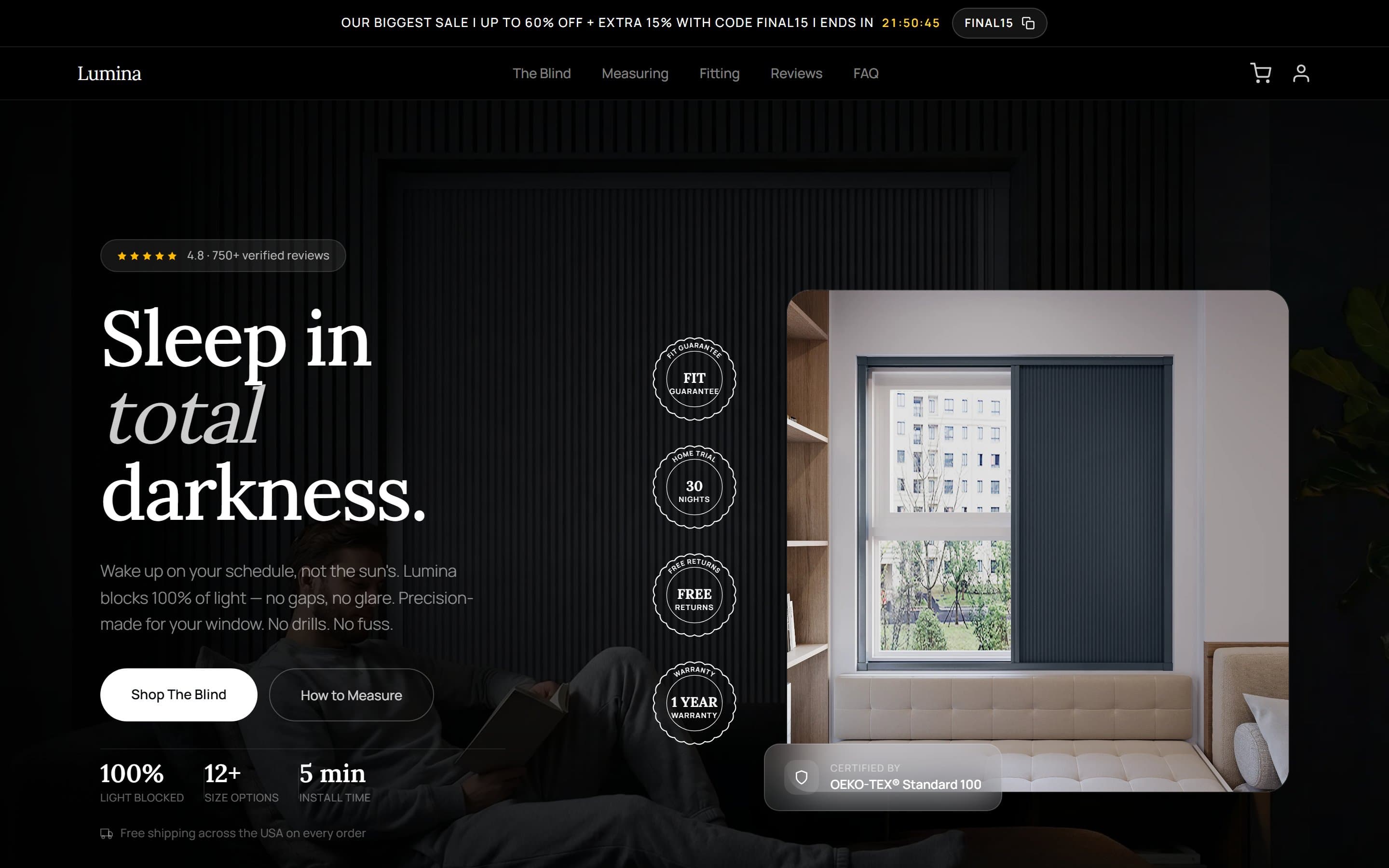
Before you ask,
we probably have.
The things people want to know before they send the first message. Anything not here, just ask us directly.
Both, depending on the catalogue — a straightforward store often doesn't need a fully custom build, a complex configurator usually does. We'll recommend honestly, not default to whichever we'd rather build.
Yes — Stripe handles both, and we've built real subscription and one-off checkout flows on client sites.
That's some of our most-repeated ecommerce work — pricing and previews that update live as a customer builds their order.
Stock levels stay in sync with what's actually available, so a sold-out item can't be sold again by mistake.
Yes — you get an admin area for products, orders and content, with a walkthrough so it doesn't need to come back through us.
It's designed mobile-first, not adapted afterward — most of your buyers will be checking out on a phone.
Got a site that
needs to work harder?
Tell us what you're building and what it has to achieve. You'll get a straight answer on scope, timeline and cost — not a sales pitch.